doghood, domestication, and eldritch horror
When I look into the eyes of my dog as she watches me eat dinner, I see her haunted by the eldritch horror that is my food. Desperate, she begs to know more, and I, from the couch, watch with remorse and confliction.
In lovecraftian/eldritch/cosmic horror, things at the edges of comprehension are the source of the suspense and unease in the story. Seeing these things does something to their viewer. The revelation that the world is deeply and fundamentally different than you ever imagined, and that you are unable to grasp the full extent of it (or even understand your role in it) is unsettling at best and insanity producing at worst. In any case, this glimpse into a deeper, stranger, incomprehensible world irreversibly alters the existential experience of the glimpser.
It would not be wholly true to say that Molly Brown, who lives on a diet of dry food, scrambled eggs, and carrots, was never meant to know how good food can taste. In some parallel reality where dogs went uncreated and she is a wolf, she eats all forms of fresh, raw meat which are probably more tasty and satiating than the crumbling pebbles we fill her bowl with. Still, in that world, she hasn’t harnessed fire. She has no tools for preparing food and no thumbs to hold them. She definitely doesn’t have access to international trade that brings flavors and foods from across the world to her doorstep. The depth and quality of taste present in human food is still far, far, outside her scope.
And to have it revealed? Can you imagine? Would it be better to never know at all? To be given a taste of the food is to be teased with it. Taunted with wonders outside your grasp. (Do domesticated dogs dream of opposable thumbs?) Does tasting it even matter? Is the smell enough? And what can I do from the throne of the couch to make things easier-- more sensical?
This experience she and I share seems inextricably rooted in the dynamics of domestication. There’s both power and skill differentials present in the relationship between domesticator and domesticatee. The domestication occurs because both parties have something they can offer the other, but only the domesticatee must drop their wildness and sacrifice some level of autonomy in order for the relationship to proceed. On a species level, there is some reason this sacrifice is deemed “worth it”— consistent food and shelter usually— but it is a sacrifice nonetheless, and you have to wonder about what happens inside the individuals of the species, about the roots of wildness that fed the creation of the animal’s body in the first place.
There's a second perspective that emerges here, almost as unsettling as the first. As a domesticated creature, certainly there's some kind of horror in being exposed to the wonders of your domesticator but having no control over your access to them (and being uncertain about when and how access will occur). In the scheme of this writing, that's eldritch horror emerging from a window into the world of the domesticator. But is there a second window? One into the undomesticated self? The deep part of the body where wildness is inextricable? Does she ever feel, in her bones, that she could kill me and take what she wants?
When your life and comfort are dependent upon structures that require alienation from the animal part of yourself, surely there's an eldritch horror evoked by meeting that part. What then?
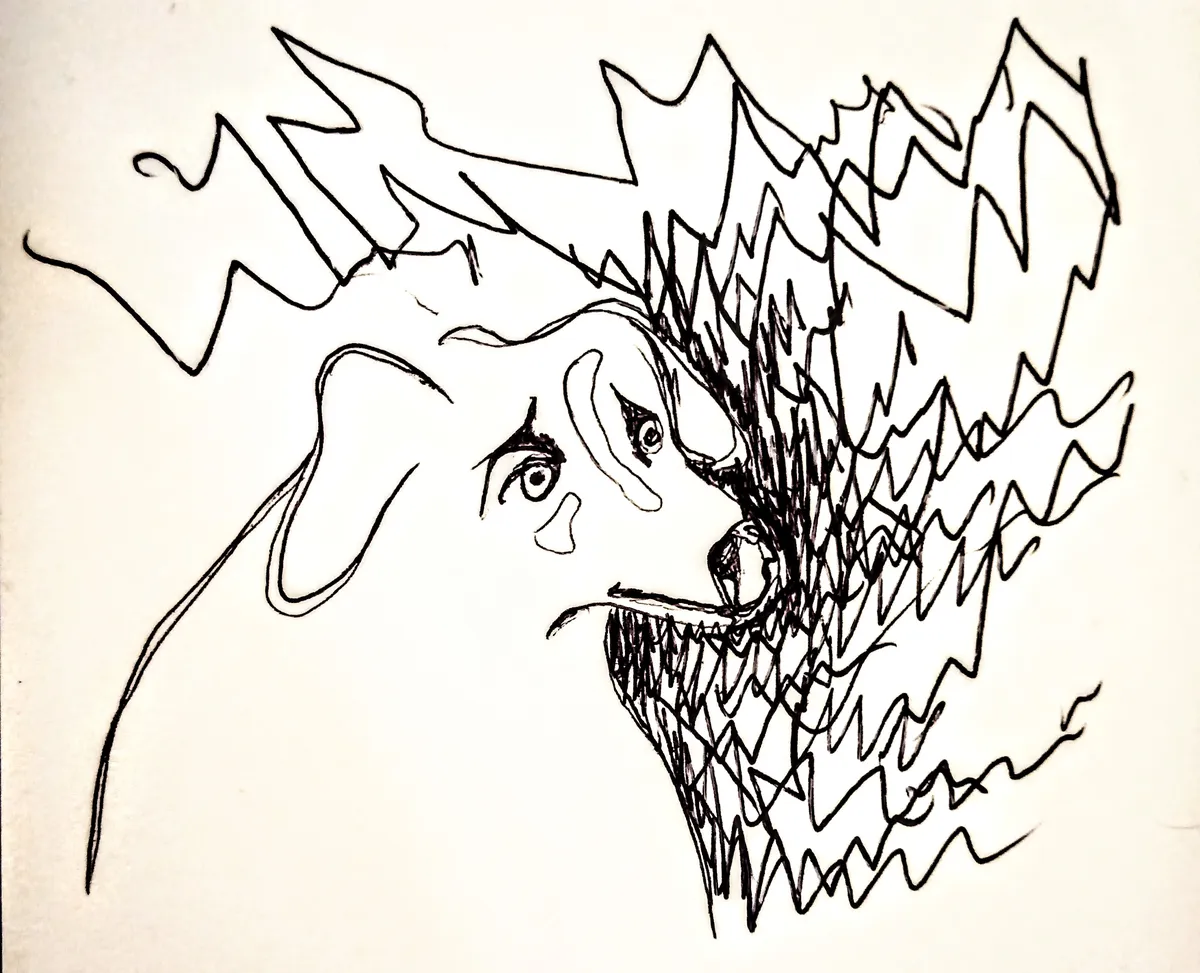
This is about Molly, and this about dogs, but I'm thinking other things as I write it too. About civilized humans. About class. About shadow work. About what it's like to be a kid. That's all for another time, but you can read this with that in mind.